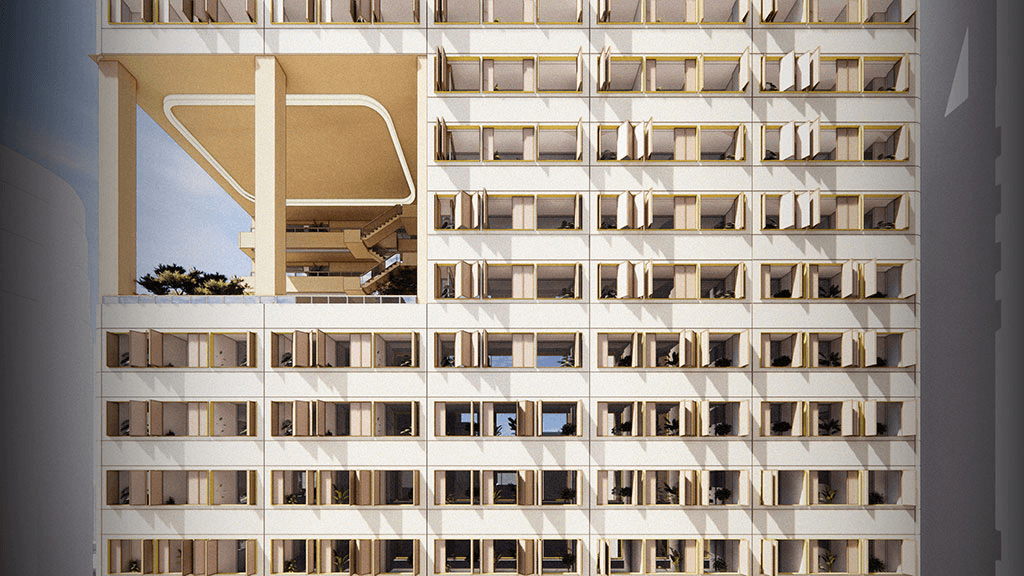
Office-to-residential (O2R) conversion has emerged as a potentially practical solution to respond to shifting office demand while expanding housing supply and supporting the long-term vitality of downtowns and job centers. However, O2R plays out differently across U.S. cities: market conditions, building stock, and local policy goals vary widely, and the same conversion approach can deliver very different outcomes. Therefore, local leaders and stakeholders need practical, accessible resources to understand these dynamics, assess whether O2R can advance their community's priorities, and inform discussions about the policy and financial tools that may be needed to make conversions possible.
This dashboard builds on the nationwide research study conducted on behalf of the U.S. Department of Housing and Urban Development (HUD), by Gensler, HR&A Advisors, Brookings Institution, and Eckholm Studios, titled Office-to-Residential Conversion: Case Studies and Policy Tools, completed in 2025 (see Brookings Institution for introductory overview). As part of the study's Community Guide to Office-to-Residential Conversions (see Part 1 on economics and Part 2 on policy levers), the team produced this scenario-based calculator to estimate the financial feasibility and development outcomes of converting common office building types under different local policy environments.
For any given building, an owner's decision to convert (or not) reflects their expectations about the current and future value of the building, the need for reinvestment, tenant dynamics, financing, and the regulatory context—factors that are often sensitive and not transparent to outside observers. This tool provides a high-level, generalized model of the financial component of that decision-making, enabling users to compare scenarios and explore how building characteristics and policy conditions may affect feasibility.
Note: Results are for illustrative purposes only and do not replace building-specific due diligence, code analysis, or project underwriting.
Building Prototypes
Select the building prototype that most closely resembles the asset you want to test, then choose the policy environment to reflect the regulatory and incentive context you want to explore.
Policies and Tools
Findings
The work that provided the basis for this publication was supported by funding under an award with the U.S. Department of Housing and Urban Development. The substance and findings of the work are dedicated to the public. The authors and the publisher are solely responsible for the accuracy of the statements and interpretations contained in this publication. Such interpretations do not necessarily reflect the views of the Government.